Saturday, 29 October 2022

FIRST FORMULA

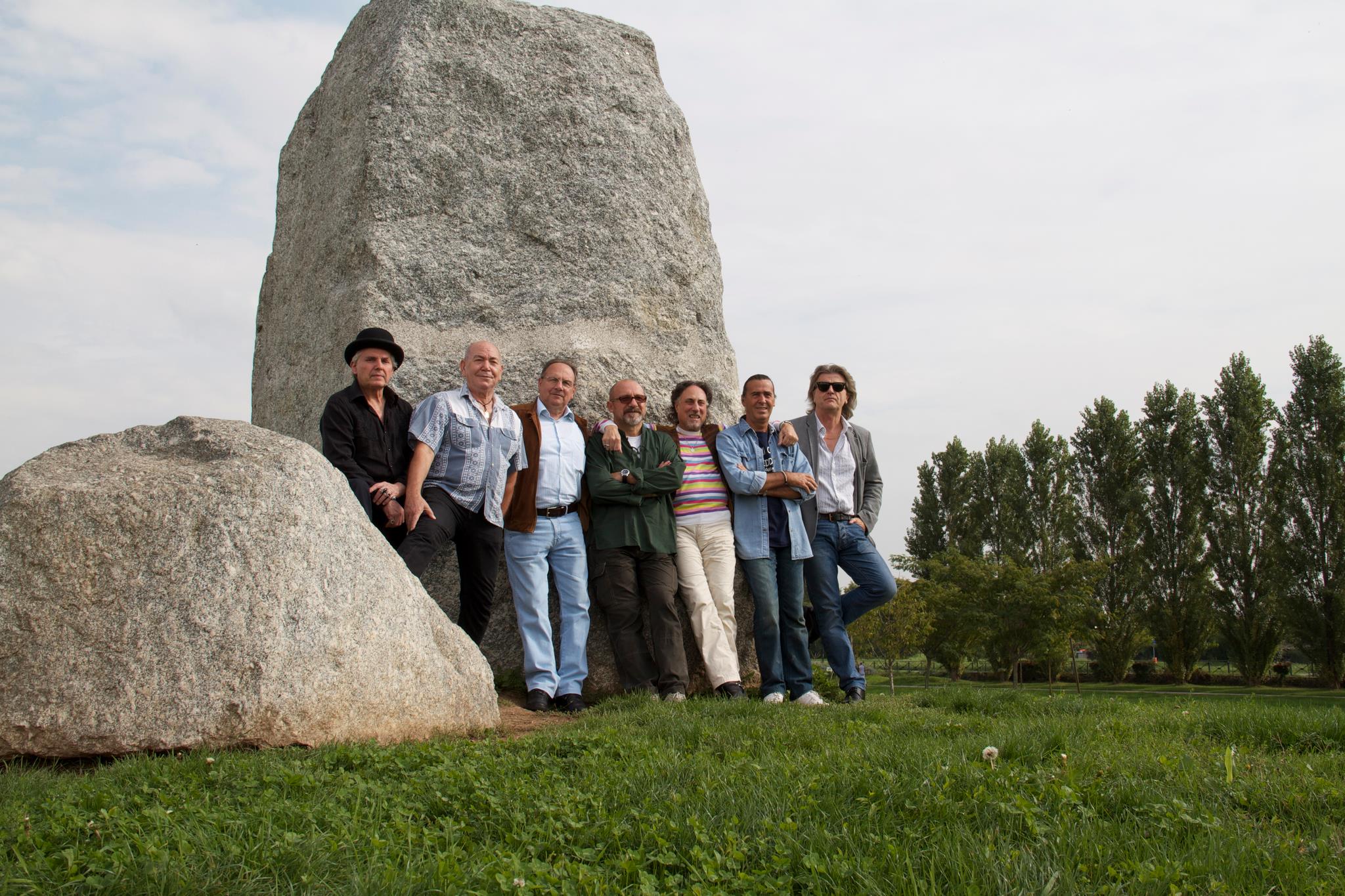
Formula 3 were formed in Milan in 1969 with a line up featuring Tony Cicco (drums, percussion, vocals), Gabriele Lorenzi (keyboards, vocals) and Alberto Radius (guitars, vocals), three skilled musicians and appreciated session men. Dies irae, their debut album, was released in 1970 on the Numero Uno label, produced by Lucio Battisti. The overall sound draws on psychedelic and post beat influences and the songwriting is mainly in charge of the band’s mentors, Lucio Battisti for the music and Mogol for the lyrics. The psychedelic atmospheres of the album are in some way depicted by the colourful art cover...
 

 The opener, “Dies irae”, is a public domain song with a religious subject elaborated and re-shaped by band. Wild organ rides, electric guitar riffs in debt with Jimi Hendrix and spoken words in Latin in the background build up a quasi apocalyptical atmosphere... In my opinion, it's a good piece that blends psychedelic-rock with Gregorian chant and it's my favourite piece from this band. Unfortunately, the other tracks are not at the same level...

“Non è Francesca” (It’s not Francesca) is a cover of a best known Lucio Battisti’s song that tells of a man who sees his girlfriend passing by along the street with another man and can’t believe to his eyes. Here the song is re-arranged with a strong Latin rock flavour that every now and again could recall Santana, but I prefer by far the original Battisti's version...

“Perché... Perché ti amo” (Because... Because I love you) is a melodic song veined of psychedelic touches signed by Mogol and Edoardo Bennato, a declaration of love for a charming woman. Black or white, the protagonist loves her passionately... Is that woman just a metaphor for the music?


“Questo folle sentimento” (This crazy feeling) is a carefree pop rock song about a man falling in love at first sight with a girl amidst colourful lights and psychedelic sounds. This piece was commercially successful as a single and here is strangely divided into two parts, probably just because of the length of the original vinyl edition. The first part is just a short instrumental introduction that ends the first side of the LP while the second part opens the second side of the album with the vocal part...

“Walk Away Renee” is sung in English and is a cover of a love song signed by Michael Brown, Bob Calilli, and Tony Sansone, recorded in 1966 by American baroque pop band The Left Banke and already covered in 1967 by The Four Tops. This version features a darker mood and a good instrumental middle section with organ and guitar in the forefront...

“Se non è amore cos'è” (If it’s not love, what is it?) is a melodic, cheesy song signed by Elio Isola, Mogol and Sandro Colombini with a slow pace and romantic, consolatory lyrics telling of a young man under a starry sky who tries to stop the tears dropping from the clear eyes of his sweetheart...

“Sole giallo, sole nero” (Yellow sun, black sun) is a weak, silly love song signed Mogol-Battisti mixing simple Italian melody and psychedelic trips. In the long instrumental coda there’s room for a nice drum solo and some experimental solutions but, in my opinion, the result is not convincing at all...

On the whole, an interesting album that marks the passage from the sixties to the seventies on the Italian music scene but that is not essential for prog lovers...

You can listen to the complete album HERE


Wednesday, 26 October 2022

SONGS FROM THE SWAMP

Gruppo Palude took form in 2012 in Merone, a small town of the province of Como, and, according to the band, their name refers to a swamp on the banks of the Lake of Pusiano. After a first immature demo in 2016, in 2021 they released an interesting debut album, entitled Arché, on the independent FIL1933 label with a line up featuring Ruben Nese (guitar, synth), Angelo Panichella (guitar), Michele Ripamonti (bass), Riccardo Zerboni (drums) and Tommaso Severgnini (vocals, flute). It’s a concept album dealing with an inner journey, the search for a lost ego to overcome a personal crises and find new energies. The overall sound draws on many different influences, from seventies prog and hard rock to metal and even rap... 


The opener “Mayday” starts by a sound of hooters in the background and a first part describing a disquieting inner silence where even a simple hiss could be deranging. Then, with a sudden burst of energy, comes a desperate call for help as the protagonist feels like a passenger on a sinking ship in the middle of a raging sea. When the alarm is over and the calm comes back nothing is the same...

“Stop. Go!” begins softly but after a while the rage explodes. It is difficult for the protagonist to stand still wearing a mask of apparent calm when he’s deeply troubled and overwhelmed by his inner crises. He’s put into check and can’t get out of it, he’s getting mad in a crescendo of stop and go... 


Gruppo Palude 2020
 
“Pillola azzurra” (Blue pill) tells in music and words of the deep sense of bewilderment of the protagonist who’s losing himself in a vortex of contrasting feelings and sensations while the following “Il canto delle sirene” (The song of the sirens) describes a nightmarish night where all the senses of the protagonist are in fire and every chance of help sounds deceitful like the old charming songs of the sirens...

Next comes “Prosopopea” (Prosopopoeia) whose title refers to a rhetorical device in which a speaker or writer communicates to the audience by speaking as another person or object. It’s a reflective, melancholic track that describes a feeling of helpless dizziness with the protagonist sinking to the bottom of a dark, inner sea, lost in the breaths and glances of lovely people who seem to ignore even his presence...

“Il guerriero” (The warrior) describes the protagonist observing from the outside his life crumbling like a castle. He’s in an ethereal state between fear and resentment, he can’t understand any more what is flesh and what is stone, he can’t say if there’s a winner behind this loss and if he will rise again from the ruins of his life. He feels like a warrior who, in time of peace, lashes out at himself...


The following “Nostalgia” conjures up the image of a broken mirror reflecting the face of the protagonist. Selfishness took its share and now what’s left is a deep sense of solitude. He feels something inside him that is feeding on his feeble heartbeats, the memory of fragile dreams and a wistful affection for the past...

“Hey Man” welcomes a new awareness, what’s reflected in the mirror is not a monster and the protagonist finally recognizes his own face. He would like to fly like Icarus, but not too high to avoid the fall... Now he can come out of the darkness where he felt safe and look again at the colours of life...

The following “Piangere da soli” (Crying alone) marks a step forward, beyond good and evil the protagonist now looks up and accepts his reality, breaking his inner chains... Then, “Ora e qui” (Now and here) ends the album with a positive mood and a heartfelt call for freedom.

On the whole, a good work that deserves a try.

You can listen to the complete album HERE

More info:


Tuesday, 25 October 2022

OLD TAPES AND PHOTOGRAPHS

Formed in Milan in the early seventies on the initiative of Roberto “Paramhansa” Puddu, Kundalini Shakti Devi managed to record a demo in 1974 with a line up featuring Ampelio Biffi (drums), Tony Ognibene (keyboards), Gianni Lecchi (guitar), Massimiliano Moretti (guitar), Roberto “Paramhansa” Puddu (vocals, sax, flute), Claudio Capetta (bass) and Enrico Radaelli (keyboards). They tried to develop their compositions shaping long, complex structures, inspired by the progressive rock bands of their era. Unfortunately, in the seventies they hadn’t the chance to properly release an album on account of the lack of interest of the music business and so the members parted ways. It wasn’t until 2013 that the old tapes were taken out of the drawer, restored and finally released on the independent AMS-Btf label.
 

The long, complex opener, “Flash”, stages in music and words a series of snapshots of everyday life taken in a modern city. The first one portrays a haughty girl who proudly walks in the street wrapped in her blue jeans, aware of her beauty that she exploits to make her way in a society where appearances rule. The second one depicts an old beggar coming home under the merciless glares of the good people, law abiding citizens without empathy. His house is just a poor hut, his meal meagre... Then it’s the turn of a ruthless businessman, a wealthy womanizer who has reached is goal and now is at the top of his social climb and feels like a real man! The fourth picture is that of a biker, a hard-looking man hiding his eyes behind the sunglasses, a wicked hell’s angel ready to fight... The last three pictures are more abstract and are used to describe in a sarcastic way the consequences of organized religion and consumerism. The music and lyrics conjure up the images of two armies ready to wage war one against the other in the name of their God and every army has its own priests blessing their soldiers and weapons before the battle, then there’s the image of religion put for sale in tin cans. There are pills to corroborate the spirit and aggressive advertisements compelling you to buy the most stupid things... Just snapshots, glimpses of the real world that surround us!
 
Kundalini Shakti Devi 2013

Next comes “Museo galattico” (Galactic museum) that deals with environmental issues. The music and words conjure up the image of a lifeless planet with red deserts and mountains of lava. A spaceship loaded with tourists is flying over this gloomy world. A voice explains to the passengers that once mankind used to live there, it’s the old planet Earth that has been turned into a huge museum where to look for archaeological treasures and signs of its old civilizations. There’s a feeling of surprise and curiosity. At last the spaceship reverses its course and goes back into the infinite space...

The last track “Sensitività” (Sensitivity) is a disquieting piece that describes a man struggling on the edge of madness with an invisible enemy. He feels that an extraterrestrial entity is feeding on his thoughts. He tries to get rid of it but the creature from space doesn’t let him alone. He’s just a simple man, why the powerful monster keeps on torturing him all night long?

On the whole, this is a good document of the creativity of a band that would have deserved more credit. Given the sources, the sound quality is not perfect but, in my opinion, this album deserves a try.

You can listen to the complete album HERE

Kundalini Shakti Devi: Kundalini Shakti Devi (2013). Other opinions:
Michael “Aussie-Byrd-Brother”: “Kundalini Shakti Devi” is a fine addition to a RPI collection, one that improves greatly with each additional listen, but newer fans just starting to approach the genre should pick up endless more exciting and important albums than this. It still makes for a very worthwhile listen, and, seeing the current trend of numerous vintage Italian prog acts recording new albums, lets see if the band might get around to recording a follow-up to this one - better late than never, and there's too much talent and unfinished potential here to go to waste!... (read the complete review HERE)

More info:

Saturday, 22 October 2022

PROG AND JAZZ

The Cinema Show Quartet is an interesting project from Rome that came to life in 2018 on the initiative Paolo Bernardi with the aim of taking progressive rock pieces and dressing them up in jazz arrangements respecting their spirit. In 2022 the band self-released a good debut album entitled Fugue To Heaven with a line up featuring Paolo Bernardi (piano, keyboards), Luca Rizzo (sax), Flavia Ostini (contrabass) and Riccardo Colasante (drums). In my opinion, it’s a beautiful exercise of style where all the members of the band showcase great musicianship and gusto... 


The opener “Marooned Mother In The Sky” sets the atmosphere with a brilliantly arranged medley of Pink Floyd’s pieces that in some way are turned into something new and fresh. The interaction between sax and piano is remarkable and it’s backed by a discreet but effective rhythm section with excellent results...

Next comes Queen’s “Bohemian Rhapsody”, where you can hear swinging ragtime echoes, every now and again the music seems almost coming out from an old radio of the fifties while the following Genesis’ “The Cinema Show” drives your through dreamy, cinematic atmospheres on the wings of soaring sax melodies. In the middle there’s even room for a nice drum solo...

“Is There Anybody Out There? Part 1” is just a short break that leads to “Bure in the Fugue!” and to its Jethro Tull’s rhythmic variations on Bach’s theme with the addition of a strong jazz flavour that could even recall Henry Mancini’s Pink Panther’s Theme. Then it’s the turn of a beautiful treatment of Luis Enriquez Bacalov’s “Concerto Grosso per i New Trolls” and Jon Lord’s “Sarabande”... 


The notes of “Horizons Parte 1” introduce the following “Fugue To Heaven” and “La tua assenza” (Your absence), the only two original compositions of the album. In my opinion, both tracks are excellent examples of prog chamber music mixing classical influences, jazz and a charming romantic taste: the musicians involved in this project should have more confidence in their compositional skills...

Pink Floyd’s “Is There Anybody Out There? Part 2” leads to an amazing arrangement of Genesis’ “Firth Of Fifth” with some piano pyrotechnical passages and a delicate, dreamy sax part that takes you towards warmer sounds and Latin American latitudes. Then it’s the turn of Pink Floyd’s “Summer ’68” that here is combined with hints of Herbie Hancock’s Cantalupe Island, as to underline its hot subject matter...

A good arrangement of Genesis’ “In The Cage” and “Horizons Parte 2” precede the last two pieces that should be considered just two bonus tracks: a different version of Jethro Tull’s “Bourée”, here re-named “Bourée in Fugue!”, and of “Firth of Fifth” both performed by the flute ensemble Per un Pugno di Flauti, an Italian ensemble of flutists born inside the Santa Cecilia's Conservatory in Rome.

On the whole, a very interesting work that deserves a try.

You can listen to the complete album HERE

More info:
https://www.facebook.com/profile.php?id=100064178103608

Friday, 21 October 2022

DOUBTS AND PROMISES

L’Attimo del Dubbio is an interesting project from Padua that took shape in 2018, inspired by the soundtracks of Italian crime action seventies B-movies (a genre known as poliziottesco), in the vein of bands such as Calibro 35, La Batteria, Strato’s or Apollo Beat. In May 2021 they self-released a first EP entitled Vol. 1 with a line up featuring Filippo Lazzarin (guitar, organ – previously member of another prog band called Vuoti a Rendere), Alberto Baretta (drums, synth – from Oberon) and Andrea Mengardo (bass). It’s just a nice collection of five short instrumental pieces, a kind of declaration of intent. The art cover gives a good idea of the musical content and of the sources of inspiration...


The opener “Niente mezze misure” (No half measures) starts by a dark church-like organ passage, then the rhythm section comes in and the tension rises for a reckless ride through the streets of a busy city... The following “L'attimo del dubbio” (The moment of doubt) brings a touch of mystery and vague Mediterranean flavours while the cinematic “Il tormento e l'estasi” (Torment and ecstasy) is more frenzied and dynamic.

“La bravata” (The stunt) features a brilliant drumming and some sudden changes of direction while the last track, “Istantanea di una rapina” (Snapshot of a robbery), ends the EP with a darker, reflective atmosphere and good promises for the future...

You can listen to the complete EP HERE


****************


In December 2021 the band self-released another EP, Vol. 2. It’s just another collection of five short pieces, but this time the band, with the line up still featuring Filippo Lazzarin (guitar, organ, vocals), Alberto Baretta (drums, synth) and Andrea Mengardo (bass), during the recording session was helped by two other former members of Vuoti a Rendere, credited as guest musicians, Annalisa Agostini (sax) and Marina Miola (violin) who contributed to enrich the sound. The art cover is in the same style of that on the previous EP and the subject matter is the same as well but, in my opinion, the song-writing is more consistent and marks a step forward...


The opener “L'alchimista” (The alchemist) starts slowly and conjures up the image of a mysterious character. As the rhythm rises, from deep within him rise thoughts dark and dangerous as the shapes of killer sharks rising to the smell of blood... I think that this short quote from The Sunbird by Wilbur Smith could describe the atmosphere of this track very well! Next comes the nervous “Night Stalker” that suggests the feeling that tragedy might prove to lurk behind a curious train of events...


The jazzy “Disevoluzione” (Disevolution) is a disquieting piece containing some sarcastic reflections about the regression of our civilization, based on an indiscriminate, void criticism and a serious lack of values and ideals. Beware! There’s nothing more deceptive than an obvious fact... This is also the only sung piece of the EP.

The title of the following “Lupus in Fabula” (Speak of the devil) refers to a Latin expression used when you speak of someone or something that suddenly appears out of the black, almost as if you were calling or summoning that presence. It’s a funny piece built on jumping bass lines and unexpected digressions... Then “Il contorsionista” (The contortionist) ends the Ep with a good dose of vitality and gusto.

On the whole, a very promising work!

You can listen to the complete EP HERE

More info: