Showing posts with label Imperia. Show all posts

Wednesday, 15 December 2021

THE RESTORED MUSEUM

This live in studio version of Zarathustra marks a new start for Museo Rosenbach. In fact, the band came to life again in 2012, after a long hiatus and a first ephemeral reunion in 1998. It was released on the independent label Immaginifica with a line up featuring founder members Alberto Moreno (keyboards), Giancarlo Golzi (drums, percussion) and Stefano “Lupo” Galifi (vocals) along with Max Borelli (guitar, vocals), Sandro Libra (guitar), Fabio Meggetto (keyboards) and Andy Senis (bass, vocals). The recording of this album was a way to warm up for new concerts and projects and the artwork by Rudy Camponovo underlines the intention of Museo Rosenbach’s to go back to their roots without renouncing to update the old sound with the help of the new technologies...
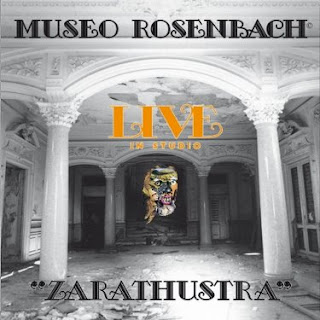
 
 
The track list follows a different order from the original album. A brand new section opens the first track, “Intro - Dell’eterno ritorno” (the 1973 closer) and from the very first notes you can perceive that the interaction between old and new members is perfect and the sound quality brilliant. “Degli uomini”, “Della natura” and the long suite “Zarathustra” follow without weak moments and everything works. The new line up worked hard to find the right balance re-arranging the old material with the due respect but without a philological approach. The final result is excellent and I think that this album can be considered a wonderful calling card for the new incarnation of the band.
 
You can listen to the complete album HERE


****************

 
The same line up that recorded Zarathustra Live In Studio worked on its 2013 follow up, Barbarica, that was released on the independent label Immaginifica like its predecessor. The result is gorgeous and reflects the successful efforts made by the new line up to update vintage sounds with a new millennium taste. The beautiful art cover by Monica Di Rocco in some way expresses the connection with the previous work...


The opener “Il respiro del pianeta” (The breathing of the planet) is a brand new suite that deals with environmental issues and takes over the baton from Zarathustra trying to describe the difficult relationship between man and nature. There are many changes in rhythm and atmosphere as the music and lyrics evoke with powerful, colourful images the spirit of the Earth and its smothered, pulsing beating. Crows and eagles flying over the horizon show paths, currents and rituals to admire the uncontaminated face of the planet while the shades of a thick, impenetrable forest hide the words that bring the storm in its deepest secrets...

“La coda del diavolo” (The devil’s tail) is another brand new track that deals with the consequences of war. It’s a complex piece that begins softly, by a reflective part where the vocals play the role of a man escaping from the horror of war, in search for peace and harmony. The protagonist has lost his friends and if he opens his heart there’s no one left to listen to him. His voice soars like a heartfelt prayer. Then an aggressive electric guitar breaks in, the rhythm rises, the atmosphere becomes heavier as the music and vocals describe with visionary poetical force a valley thundering with bombs where harmony is torn apart by weapons. Blind hatred, desperation and a senseless fury lightens the smile of a merciless stone giant...
 

“Abbandonati” (Abandoned) is a new version of piece from Museo Rosenbach’s second studio album, Exit. The music and lyrics depict with their visionary force a country ravaged by war, starving children desperately trying to escape from a divided nation, scared eyes behind the barbed wires, forgotten heroes dead in vain. The new version, in my opinion, is far better than the previous one. The first part of this piece on Exit, “Tuareg”, was cut off and the second part developed with a different, convincing arrangement, evoking the silent pain of the refugees who are desperately trying to find a better way of life...

The epic “Fiore di vendetta” (Revenge flower) is an excellent new version of a piece originally released on the 2003 Colossus Musea themed album Kalevala. It tells of a dramatic story of war and vengeance. A beautiful girl is one of the few survivors of her people, annihilated by the enemy that made of her a slave. The girl bides her time while the seed of revenge grows in her soul, ready to blossom like a terrible flower...

“Il re del circo” (The king of the circus) is another piece that was originally released on Exit and that finds here a new life with the great interpretation of Stefano “Lupo” Galifi in the role of a crazy, merciless sniper shooting at the civilians in the streets of Sarajevo during the war in the ex Yugoslavia and a more aggressive arrangement that emphasizes the surreal horror of a rain of tears and bullets...

On the whole, an excellent work!

You can listen to the complete album HERE


****************

 
Live In Tokyo is a Museo Rosenbach’s live double album that was recorded at Club Città, Kawasaki, Tokyo on April 26, 2013 and released in 2014 on the independent label Immaginifica. Unfortunately, it’s the final act of the line up featuring Alberto Moreno (keyboards), Giancarlo Golzi (drums, percussion), Stefano “Lupo” Galifi (vocals), Max Borelli (guitar, vocals), Sandro Libra (guitar), Fabio Meggetto (keyboards) and Andy Senis (bass, vocals). In fact, after the passing away of drummer Giancarlo Golzi in 2015, the band decided to stop. It’s a real pity...
 

The sound quality is absolutely good, thanks to the help of recording engineer Sinpachiro Kawade and live recording producer Masa Matsuzaki, and allows you to experience all the energy of a band perfectly fit and up to the task, musicians that play with great precision and passion giving new life to the old pieces and presenting the new ones with the right feeling.

The first CD offers a live version of Zarathustra performed in front of an enthusiastic and respectful public that galvanizes the musicians. The order of the tracks is the same of 2012 Zarathustra Live In Studio. The second CD presents all the tracks from Barbarica, although “Fiore di vendetta” is included only as a bonus track and was recorded during a rehearsal in Italy at Rosenhouse Studio on February 10, 2013. “La coda del diavolo”, “Abandonati”, “Il respiro del pianeta” and “Il re del circo” are all worth listening to, as their studio versions...

On the whole, an excellent document of a great performance.

You can listen to the complete album HERE

More info:

Monday, 13 December 2021

ART POP MUSEUM

Exit is the second album by Museo Rosenbach. It was recorded between 1998 and 1999 and released in 2000 on the Carisch label with a new line up featuring founder members Alberto Moreno (bass) and Giancarlo Golzi (drums, percussion) along with Andrea Biancheri (vocals), Marco Balbo (guitar), Marioluca Bariona (keyboards) and Sergio Cossu (keyboards). If you expect from this work something similar to the band’s 1973 album Zarathustra I fear you’ll be disappointed since here there's no much left of the old Museo Rosenbach and the overall sound is probably closer to the elegant pop of Matia Bazar (a band which featured in the line up both Giancarlo Golzi and Sergio Cossu) than to seventies prog... Anyway, according to the band, it’s a concept album sui generis that tells about the uncertainty of evaluating things, the impossibility of giving a definitive judgement, in history as in daily events and the artwork by Rudy Camponovo tries to express this incertitude...


The opener “Exit” is a short intro to the album with a good guitar arpeggio and obscure lyrics about the need to find a way out from boredom and daily grind... Then, with “Il terzo occhio” (The third eye) the music turns to a smart pop-rock sound while the lyrics conjure up an emotional labyrinth where there’s a cage at the end of every alley you take and where you get lost between mystic fantasies and unknown tunnels, under the look of a third eye that can’t see the truth any more...

“In Equilibrio” (In balance) is a melancholic piece evoking the vibrant memories of the time spent with a missing person as a voice, lighter than silence, says that it’s too late for regret... Then it’s the turn of “Love”, a calm, bitter-sweet song about a broken relationship and the sense of an exasperated, pointless challenge that takes pain into account...

“Tuareg / Abbandonati” (Tuareg / Abandoned) is a good piece describing poor, starving people in the desert, shepherds that lead their flock of sheep to town... An invocation rises, an exhortation to save the children from war and famine before it’s too late! Then, the following “Illuse le intenzioni” (Deluded intentions) describes in music and words a tormented relationship filled with cheating and charms, pain and pleasure...


The long, complex “Il re del circo” (The king of the circus), in my opinion, is the best track on this album and tells about the war in the ex Yugoslavia. Here the vocalist plays the role of a merciless sniper, king of an opaque and scary circus that stages blood and madness while time stands still under a rain of tears and bullets... Next comes the evocative “Koln Raid” that conjures up the images of a love story under the bombs in a German city during World War II.

An instrumental version of “Exit” leads to the last track, “Un porto nel sole” (A port in the sun), a suggestive piece that ends the album with Mediterranean flavours, hope and expectations...

According to a recent interview with Alberto Moreno on It's Psychedelic Baby Magazine (that you can read HERE), ‘Exit’ turned out to be an album not perfectly in line with progressive orthodoxy. I recognize that the songs on this album did not have the epic-symphonic structure of the previous one, because they wanted to tell a different, more intimate dimension. It is also true that the arrangements are more pop than prog, but this is due to a perhaps too long preparation phase that allowed us to go back to the arrangements several times with the result of curbing the creative momentum and innovative settings. But I must add that, as an author, I do not consider ‘Exit’ structurally different from ‘Zarathustra’...


On the whole, I think that this is a good album that could be of some interest for collectors and fans, even if the music is not what do you probably expect from this band.

You can listen to the complete album HERE 


Sunday, 12 December 2021

A CONTROVERSIAL MUSEUM

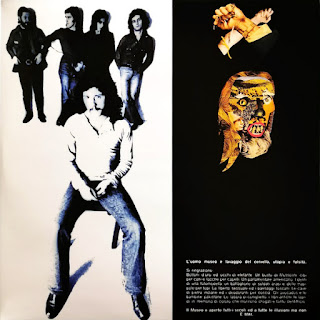
Museo Rosenbach are one of the many Italian prog bands of the early seventies that had just the chance to release an album before disappearing. Their debut album “Zarathustra” was released in 1973 and the line-up featured Stefano “Lupo” Galifi (vocals), Enzo Merogno (guitar, vocals), Pit Corradi (keyboards, mellotron), Alberto Moreno (bass, piano) and Giancarlo Golzi (drums, percussion, vocals). It’s a concept album freely inspired by the work of philosopher Friedrich Nietzsche. According to the liner notes, the quest for the super–man described by Mauro La Luce’s lyrics wasn’t meant to exalt the violent leader of a new pure breed but the serene search for a human character who, living in communion with nature, tries to purify human values from every hypocrisy... Despite the great quality of the music, on account of the controversial art cover and the misunderstandings about the concept, Museo Rosenbach were treated as fascists by critics and some of the public and the album was quite unsuccessful leading the band to split up. Nonetheless, as time passed by, this work has become a “cult album” for prog lovers...


The opener is the long title track, a suite in five parts. The first part “L’ultimo uomo” (The last man) begins with a calm, solemn pace, then vocals that seem to come from a distant place soar drawing a beautiful melody... “Face of light, they told me about you / Your story lies in the echo of the mountains / Too high to descend into us.... Shabby shadow, empty glare of the ego / You don’t need to understand the force / That pushes me to seek in the world...”. An instrumental crescendo leads to the second part, “Il re di ieri” (Yesterday’s king) and to its delicate piano and organ patterns... “No, do not go on walking on never ending roads / You can already see in me what my father, God, taught to you... Love your Land, in her womb God will form itself...”. The contrasts between a quiet church-like atmosphere and some more aggressive rhythmic passages give this track a very particular, dramatic feeling... In the third part of the suite, “Al di là del bene e del male” (Beyond good and evil) the tension rises while the vocals try to evoke how pretentious human laws are when they try to draw borders between good and evil... “Ancient tables, divine wills in the past already divided good and evil / Man alone, far from God, cannot build his own moral / Run away from your will / Under these curtains lies a false wisdom / The truth is insulted / From the moral that you created no good will come...”. The fourth part, “Superuomo” (Super-man) begins quietly and in a more reflective way suggesting that you have to choose from many answers about the sense of life what’s the right one... “Thousand traditions built a wall around me / Alone and without forces I get lost in my own words / And perhaps I’m looking for someone who has always walked behind me... / Now he is coming to life in me / I’m living the Super-man...”. Then the vocals give way to a crescendo of amazing, shifting musical passages leading to the final solemn instrumental part “Il tempio delle clessidre” (The temple of the hourglasses).


The other tracks are shorter but not less interesting. “Degli uomini” (About men) is as intense as a horseback ride. The vocals ask questions about war and peace, joy and pain, then a bittersweet reflection soars... “Like Autumn, the world wants to wither / It offers swords to the sky overriding loyalty / It grows up and, as time passes by, it kills its humanity...”.

“Della natura” (About nature) begins with a frenzied rhythm, then suddenly a suspicious, treacherous quietness comes down... “Quietness falls over the night / Virgin in its mantle... The silence with its void lights fear again / Terror, pregnant of magic as it is, makes Death’s face come back to mind...”. The rhythm takes off again, then melts into a complex, more relaxed section while the lyrics draw quite a different landscape where men live in harmony with nature and where silence is described as the singing of real poetry... “My eyes are tired, I feel now that I’m going to sleep / The dawn comes from quietness / Virgin in its own mantle, it lives and already thrills...”.
 

“Dell’eterno ritorno” (About the eternal return) is about the eternal circle of life. Strange omens shake our certitudes while life comes to an end... The music is complex as usual, marching beats alternate with organ rides while soaring dramatic vocals depict doubts and fading hopes... “Now my future is already there / The road I will take leads where the man stops / And where the Eternal Return reign...”.

On the whole a great album that suffered from the political climate of the early seventies in Italy and that deserves to be rediscovered...


From the book Rock Progressivo Italiano: an introduction to Italian Progressive Rock

You can listen to the complete album HERE

Museo Rosenbach: Zarathustra (1973). Other opinions:
Ian Alterman:
What makes any album a "masterpiece?" Obviously, there are the compositional, lyrical, musicianship, production and general execution elements. However, that is not enough. It must have something else: a quality that makes the album not only an exceptional achievement "in its time," but also an achievement that "transcends" its time - and, indeed, makes the album "timeless." Although, as noted, the production on "Zarathustra" sounds somewhat dated, it nevertheless "transcends" its time, and is not only a timeless masterpiece - in the truest sense of that word - but an exceptional, historically important album, and an absolute must-have for any serious prog-rock collection... (Read the complete review HERE)


Saturday, 24 September 2011

LIGURIA (part 3)

Liguria is not only Genoa. East of Genoa, from the nearby city of LA SPEZIA come Gruppo Autonomo Suonatori (Facebook), Ancestry (Official Website), Muzak (Facebook), Samarcanda (Facebook) and a new promising band called Foresta dell’Equilibrio (MySpace). Then, west of Genoa, there’s SAVONA, which, during the seventies gave us bands such as Corte dei Miracoli and Il Giro Strano. The best known historic band from Savona is The Trip (Facebook), which was formed in the late sixties and reunited in 2010 for some concerts and new projects. After the death of Joe Vescovi in 2014, original drummer Pino Sinnone formed The New Trip (Facebook) to carry on the memory of the band


Another local band from the seventies, Il Cerchio d’Oro (Facebook), was recently revived and in 2008 released an excellent album, Il viaggio di Colombo. Anyway the prog scene of Savona also features more recent bands. Worth  mentioning are some of the many projects of guitarist Fabrizio Bonanno such as Equiseti and the heavier Wounded Knee (MySpace), the neo prog Flower Flesh (Official Website), Nathan (Facebook) and a young folk rock band called Il Ponte di Zan (MySpace) whose name was inspired by an old local legend about a haunted bridge. There is also an interesting contemporary band from the nearby town of Varazze, Armalite (MySpace). In 2008 they contributed to the project of Colossus/Musea, Inferno - A Progressive Rock Epic with their symphonic sound, mostly inspired by Genesis and Marillion. Another town in the province of Savona, Finale Ligure, is home to Monjoie (Facebook).


Last but not least the province of IMPERIA, on the border with France. This is the setting, in the imaginary town of Ombrosa, of Il barone rampante, a wonderful novel by Italian writer Italo Calvino. Nearby the city of Imperia there’s Sanremo, a town famous for its flowers and as host to Sanremo Music Festival, a song contest that is considered almost a sanctuary of the “canzone italiana”, the traditional melodic Italian song. Nonetheless during the seventies this area also gave us prog bands such as Il Sistema, Celeste and Museo Rosenbach (Official Website). On the initiative of founder member Alberto Moreno Museo Rosenbach began a new life in the nineties with a different line-up.


Another former member of Museo Rosenbach, drummer Giancarlo Golzi, in the mid seventies joined three former members of J.E.T. (Piero Cassano, Carlo Marrale and Aldo Stellitta) and is still active with a band based in Genoa called Matia Bazar, definitely more pop oriented. A neo-prog band called Nostalgia (MySpace) also come from this town but for prog lovers today Sanremo is above all the city of the independent label specialized in progressive rock, Mellow Records, founded by Mauro Moroni and former Celeste member and solo artist Ciro Perrino (MySpace).