Showing posts with label Treviso. Show all posts

Tuesday, 3 March 2026

THE MINSTREL AND THE GHOST

Castrum Zumellarum is Favravola’s second studio album and was released in 2024 on the independent Lizard Records label with a renewed line up featuring Giancarlo Nicorelli (keyboards, piano, narrative vocals), Adriano Durighetto (bass), Paolo Coltro (drums), Alessandro Secchi (vocals), Consuelo Marcon (violin), Gianluca Tassi (electric guitar), Renato Bettello (flute, sax) and Flavio Miotto (acoustic guitar) plus the guests Bianca Luna (vocals) and Sant’Anselmo Choir. This is a pleasant and interesting prog opera with strong melodic shades and symphonic passages with the organ and piano in the foreground, a concept album that tells through music and words a legend linked to the castle of Zumelle, located in the province of Belluno. The art cover by Marta De Martin and the picture in the booklet try to give a visual form to the musical content...


Anno Domini DXXXV”, the short opening piece, features the sound of a church organ and a choir. A narrator, the voice of a ghost appearing on the castle walls, introduces the story. The choir sings Latin verses that recall the castle's construction. The following piece, “Anno del Signore 2024”, brings us back to the present with Italian lyrics and a ballad that also recalls the legend of the castle's construction... The Castle of Zumelle rises up on the top of a hill with a sheer drop down to the river Terche.... A combination of history and legend recounts that the main centre was rebuilt and enlarged by the Goths (the work of Genseric) around 540 AD... Genseric was a mysterious character and the right-hand man to Amalasuntha, queen of the Ostrogoths. After the tragic death of the sovereign, killed on an island on Lake Bolsena by assassins sent by her husband Theodahad, Genseric fled to the north with Eudosia, a lady-in-waiting, whom he married and with whom he settled down in the district of Mel... Legend goes on to tell of two twins, from which the place name Zumelle is derived, who were born from Genseric and Eudosia (from the official website of the Castle - link).

Zumelle Castle

In any case, as the narrator points out, the story told here is not about the love between Genseric and Eudosia. In fact, the castle is linked to another legend and is said to have been haunted by a ghost for centuries. This is said to be the spirit of Count Murcimiro, in love with the beautiful Atleta, daughter of Tucherio. Legend has it that, during the Longobard reign of Liutprand in the VIIIth century, Murcimiro, madly in love with Atleta, who was destined by her father for another man, decided to kidnap her and take her to the castle of Zumelle. His father-in-law never accepted his daughter's relationship with the count and, at the right moment, took revenge for the outrage by killing Murcimiro. The next piece, “Murcimiro”, introduces the character of Count Murcimiro, giving him voice. The piece begins with just piano and violin, a slow pace and a melancholic, dreamy atmosphere. Murcimiro gazes out over the landscape from the top of his castle tower. Then the rhythm picks up and Murcimiro recalls being a young knight of twenty and how people admired him for his successes in jousting tournaments. His lance always at rest, his heart unshaken, his heart unshaken. He also won at Castel d'Ardo when he saw Tucherio's daughter for the first time. Then the rhythm slackens and the atmosphere becomes bittersweet as Murcimiro recalls his flame's smile, how he fell madly in love with her and how he damned himself for love...

The next track, “Atleta”, gives voice to the female protagonist of the legend, masterfully performed by Bianca Luna. The rhythm is calm and dreamy, Atleta walks in silence breathing in memories that fill her mind with sweet thoughts. She recalls the moment she saw Murcimiro on his steed, smiling at her, opening her heart and transforming her soul into a song of love. Then comes a vocal duet, melodic and romantic, in which Atleta's memories intertwine with Murcimiro's, evoking the dream of a love that reality seemed destined to smother. The piece ends with the two lovers' resolution to do anything to make their dream of love come true, even if it means going through hell...

L’attesa” (The waiting), with its nervous rhythm, portrays in music and words Murcimiro in his castle, scanning the horizon in the throes of his passion as the days pass by empty. Even the wind that ruffles his hair seems to speak to him of that seemingly impossible love that is becoming a nightmare for him. Perhaps it isn't right, but now the decision to take Atleta by force, to free her from the fate of an unwanted marriage and make her his, grows stronger and stronger...


Il rapimento” (The kidnapping) is a long, complex piece describing Murcimiro's feelings and reflections before his beloved's kidnapping. The vocals attempt to express his anger, his love, and his ever-growing determination. Murcimiro rebels against Atleta's father's decision to marry her off to an old man. He is determined to fight fate to have his beloved with him and he refuses to give up until he sees her smile shine again. The decision is made. By the time Tucherio discovers what has happened, it is too late. The lyrics do not describe the action or the bloody battle which is left to the listener's imagination (legend tells that Atleta's brother, Orleo, was killed during the kidnapping)...

L’amore conquistato con la spada” (Love won by the sword) is a calm, dreamy ballad that opens with a delicate piano part reminiscent of Banco del Mutuo Soccorso. The song expresses all the sweetness of Murcimiro, who, having obtained what he so desired, leaves behind his anger and seems reborn like the sun after the night. The poignant interpretation and melodic lines clash with the turmoil of emotions that brought the two lovers together after the act of force. We hear the regret for the violence that was necessary and the hope for a love that will soon bear the fruit of a new life...

According to the legend, Tucherio, blinded by grief and desire for revenge, repeatedly armed an army and laid siege to the castle of Zumelle, but never managed to conquer it. Not even the marriage between Murcimiro and Atleta and the birth of their son Adelardo could bring him peace. However, one night, taking advantage of a betrayal, he managed to enter the castle. Silent as shadows, his soldiers killed the sentries and anyone else they encountered. Murcimiro died fighting to defend everything that mattered to him. Tucherio, having recovered his daughter and grandson, set fire to the castle and watched it burn. “L’assedio (L’amore ucciso dall’odio)” (The siege - Love killed by hate) gives Murcimiro voice once again and allows us to experience the final moments of his life. The song opens with the image of a crow circling over the castle, a harbinger of doom. Betrayal lurks in the folds of the night's cloak. There are shouts and agitated voices, the battle rages and Murcimiro fights to the bitter end. The enemies are too many and they ultimately prevail. Before dying, Murcimiro asks the court minstrel to sing of his love for Atleta...

The final track, “Canto d’amore di un menestrello” (A minstrel's love song), closes the circle, bringing us back to the beginning of the story. The minstrel, enchanted by Murcimiro's courage and love, composes the notes and verses that recall the figure of the unfortunate lord of Zumelle. Words and notes carved into his heart by love itself and still remembered today. Bianca Luna's voice, this time used just as an instrument, gives the song an ethereal, almost otherworldly atmosphere... The castle of Zumelle was later rebuilt by Tucherio to place Adelardo in charge and the latter, incited by a paternal uncle, killed his grandfather avenging his father's death. However, it is said that the ghost of Murcimiro still wanders the halls of Zumelle, unable to find peace because that mad passion that made him lose everything still burns within him...

On the whole, an excellent work that deserves its place in an Italianprog collection.

You can listen to the complete album HERE

Faveravola: Castrum Zumellarum (2024). Other opinions:
Ken Levine: While fans of the grittier less melodic prog forms might balk, if you love the Hammond and its place in the glorious history of rock and prog rock, I'd say it's worth crossing the moat, where the folk and RPI audience will already be waiting for you within... (Read the complete review HERE)

More info:


Wednesday, 21 September 2022

BUTTERFLIES AND TURTLES

Apryl began life in 1995 in Conegliano, a town in the province of Treviso. After a first immature demo that was recorded in 1996 and entitled Tela, in 2002 the young band finally managed to release their debut album on the Mellow Records label entitled Alorconfusa, recorded between 2000 and 2001 with a line up featuring Ermanno Barsè (keyboards, piano), Giorgio Riondato (bass), Alberto Celotto (guitar), Andrea Lorenzet (drums, percussion) and Leandro Di Giovanna (vocals). The result of their creativity is an interesting mix of vintage sounds and more recent influences although, in my opinion, the vocal parts are not always up to the task. The art cover by Flavio Gregori tries to capture the musical content...


The long, complex opener “Hesperia” sets the atmosphere. It begins by experimental sounds and a sudden surge of pulsing energy alternated with more relaxed passages. The music and lyrics evoke the image of boy who has just captured a beautiful, colourful butterfly with a net. As he admires his prey in a transparent box his fantasy begins to run and the butterfly becomes a nymph, daughter of the night. Atlantis is her home, a lost island where golden apples grow... Eventually, the magic beauty of the butterfly and its desperate efforts to escape from the box move the boy who decides to set the little creature free...  


The evocative, cinematic “Ghe-pardo” (Chee-tah) is an instrumental track that goes through many changes in rhythm and atmosphere drawing a kind o game full of jerks and slowdowns where you have to get lost to find yourself again... The following “Tarta-ruga” (Tur-tle) starts softly by a simple guitar arpeggio. The atmosphere is dreamy while the music and lyrics conjure up surreal images of hanging waves, suspicious clouds and tidy seabeds hiding mysteries and memories. Then something strange shines through and gets out of the lagoon, towards the land...

The last track, “Nelle vesti di Adia” (In the guise of Adia) begins by an oblique waltz tempo while hermetic lyrics add touches of autumnal colours upon the musical canvas to stir your imagination. The music drives you through many changes in rhythm and mood alternating soft, dreamy passages to bursts of energy taking you between lights and misty shades where subtle, dying figures dance in the twilight, so close to touch you...

On the whole, an interesting work that deserves a try.

You can listen to the complete album HERE

Apryl: Alorconfusa (2002). Other opinions: 
Dieter Fischer: As a summary this album is an excellent work by this very little known young band and I think there are still even better things to come from them. It's a blend of harmonic and odd symphonic Prog which has worked out almost perfectly. All fans of 70's Prog should definitively check it out, they won't be disappointed! (You can read the complete review HERE
 
More info:


Wednesday, 20 November 2019

LABYRINTHS AND MIRRORS

Hailing from the province of Treviso, Il Labirinto di Alice took shape in 2017 between the towns of Asolo and Montebelluna with a line up featuring Christian "Gino" Agostinetto (vocals), Daniele Forner (guitar), Daniele "Lele" Petrin (guitar), Matteo "Ford" Favero (keyboards, synth), Andrea "Simba" Basso (bass) and Enrico "Maestro" Pasetti (drums). Soon after the birth of the band they started performing live on the local scene honing their skills and had the chance to share the stage with other emerging prog bands such as Basta! or Endless Season. In 2018 the band self-released an interesting debut album entitled (Ri)Passi featuring four long, elaborate pieces where they showcase good musicianship and creativity blending vintage sounds and fresh ideas. Although every now and again their music could recall Le Orme or other historic bands from the seventies, the operatic, theatrical vocals and some heavier moments remind me of newer bands such as Absenthia, Le Porte Non Aperte or Panda Fight Club...


The opener “Il vicolo losco” (The sinister alley) if full of classical inspired passages and echoes from the seventies. The music and lyrics conjure up the image of a mysterious, silent woman. Blinded and betrayed, she speaks in an ancient language that nowadays nobody can understand, she’s lost in time, old fashioned and haunted by scoundrels who insult, plagiarize and hurt her. She feels crumbling down, falling to pieces carried away by the wind while nobody seems to care for her. Who is that woman? Well, she’s the Music Herself, she’s dying but still breathing and could still be saved and revitalized by the passion of some brave, daring people who would get rid of the stereotypes and of the market laws...


The following “Il mercante del suono” (The sound merchant) is about the role of the musician and begins by heavy electric guitar riffs and organ waves backed by a nervous rhythm section. Then a calmer part follows where the music and lyrics describe a rising sound that slowly finds harmonies and chords, metamorphosed by emotions and feelings… A new burst of energy sweeps off the dreamy atmosphere. The sound can’t be stopped just by shutting off a mouth, you can’t catch it with your fingers, you can’t shoot it down… The mood become tense as the rising sound now veers back to the instruments that gave it birth and personality because it does not forget the skins and woods where it comes from thanks to hits of the merchant… Who is the merchant of sound? A magician or just a skilful musician?

Il Labirinto di Alice 2017

“Malessere cronico di una mente impotente” (Chronic illness of a powerless mind) is a sarcastic track telling about an apathetic life regulated through a glass from where you can drink drops of fake smiles, disorder and endless lies. Here nothing is sure but pain. So, you get addicted to the glass and fall down to relax in the enchanted garden of memories… Listen to the silence and remember who you are to get free of your chains!

Then comes “Lo specchio di Ilda” (Ilda’s mirror), a beautiful track dealing with virtual reality and manipulation, loss of identity, madness and rage that ends the album with an emotional crescendo.

Despite the title, – “(Ri)Passi” refers to the words rehearsal and steps and could evoke the idea of a poor demo – in my opinion this is an excellent debut work for a very promising band!

You can listen to the complete album HERE

More info:

Monday, 7 May 2018

SILENT COLOURS


Illusioni (Illusions) is the second album by Quarto Vuoto, a talented band from Mogliano Veneto, in the province of Treviso. It follows the excellent eponymous debut work from 2014 and was released in 2017 on the independent label Lizard Records with a renewed line up featuring Edoardo Ceron (bass), Nicola D'Amico (drums), Mattia Scomparin (keyboards, piano) and Luca Volonnino (guitar) plus some guests. In fact, in 2015 Federico Lorenzon (vocals, violin) left the band and wasn’t replaced but during the recording sessions Giulio Dalla Mora (sax) and Mauro Spinazzé (violin) gave their contribute to enrich the sound on some tracks.


The new album is completely instrumental and the images provided by Lorenzo Giolin’s wonderful art work in some way take the place of the lyrics in describing the concept behind the music. According to the band, all the pieces have a meaning, a story to tell, but the listener is free to interpret them with the help of his own imagination and sensitivity… Through our music we want to tell and describe the perception that men have of the reality that surrounds them... The six tracks represent different phases of human perception...

The dreamy opener “Nei colori del silenzio” (In the colours of silence) is calm and nocturnal. The music tries to evoke the innocence of childhood and the power of imagination typical of that age. An animated cartoon video directed by Lorenzo Giolin himself was shot to comment this piece and to represent its magic...


The following “Coscienza sopita” (Asleep consciousness) is nervous and tense. It tries to depict the spirit of rebellion of youth and the awareness of maturity, when the daily grind begins to produce its effects and starts to wear you out. The picture in the booklet portrays the lights and shadows of a big city at night. Behind the window of a lighted office there’s a bent man, he seems tired. That office might be his cage...

The long, melancholic “Impasse” tries to evoke the difficulties that you have to tackle in your life, the obstacles that you have to overcome. In the booklet, in the picture chosen to comment this piece you can see a bizarre world of flying rocks connected by ropes and crumbling bridges...


Quarto Vuoto 2017

The title of the following “Apofis” (Apophis) refers to the ancient Egyptian deity who embodied chaos and was thus the opponent of light and Ma'at (order/truth). This piece starts with sudden bursts of energy, the mood is dark and seems to mark the explosion of a deep crises. Then a calm jazzy passage follows with a sax solo evoking nostalgia and regret. As the music flows, there are many other changes in rhythm and atmosphere where you can perceive growing tension, rage but also positive memories. Here the picture in the booklet with its explosion of colours on a spectral background evokes a world falling apart in an infinite space...


The reflective “Due io” (Two I) seems to evoke the wisdom and calm of the old age. The atmosphere here is almost mystical while the picture in the booklet marks the contradictions of the life in a big city where lighted skyscrapers contrast with the hidden underground net. This piece comes like the calm after the storm...

The closer “Tornerò” (I’ll come back) begins by a beautiful soaring violin passage and a nice melodic pattern. It’s a wonderful track that marks the come back to the origins, a reflection about the sense of a life that is coming to an end. What will remain of us in the afterlife? Of course, there’s no answer. It’s just a starting point for a reflection while the world is turning upside down… Set your imagination free!

On the whole, I think that this is a really good album!


More info:


Wednesday, 28 March 2018

HOMESICK SAILORS AND SALTY DOGS


Il Fedelissimo Bracco Branco came to life in 2013 in Motta di Livenza, a small town near Treviso, when Guido Morossi (drums) and Loris Ceccato (bass) teamed up with Federico Panighel (accordion, keyboards, lead vocals) to play original compositions inspired by classic and progressive rock. In 2014 guitarist Stefano Crovato joined them and, after a good live activity on the local scene, in 2017 the band self-released an excellent debut album entitled Appunti di navigazione (Navigation notes), a conceptual work dedicated to the sea. In my opinion it’s an excellent work, fresh and rich in ideas. The use of accordion and the theatrical vocals give a particular touch of colour to pieces where vintage echoes are perfectly blended with more modern sounds while the packaging and booklet are enhanced by Erika De Pieri’s wonderful paintings that in some way convey the musical content through visual art. Strong melodies against the tides, timeless adventurers sailing free across unknown seas dreaming of new discoveries and promised lands… Are you ready to set off? 


The brilliant opener “Levate l'ancora” (Weigh anchor) introduces the subject matter: here the lyrics are loosely based on the Dialogue between Christopher Columbus and Peter Gutierrez from the Small Moral Works by Italian poet and philosopher Giacomo Leopardi while the music evokes open seas and the longing for adventure and freedom… Just as we care nothing for many benefits as soon as we possess them; so sailors cherish and value, very greatly, numerous things that are far from being good, simply because they are deprived of them... Once on terra firma, the mere consciousness of being free to go where we please will suffice to make us happy for several days... (Giacomo Leopardi, translated by Charles Edwardes). 

Il Fedelissimo Bracco Branco 2017

The music and words of the following “La zattera nel fosso” (The raft in the ditch) tell about the desire of adventure of a child who looks at the ships leaving a seaport for unknown destinations: he dreams to leave behind him the misery and boredom of his present life becoming a sailor like in a Stevenson’s novel… “Soon the anchor was short up; soon it was hanging dripping at the bows; soon the sails began to draw, and the land and shipping to flit by on either side; and before I could lie down to snatch an hour of slumber the Hispaniola had begun her voyage to the Isle of Treasure...”. Just a short quote from the novel Treasure Island to give you an idea of what this track is about! 


“Nella tana del mostro” (In the monster’s lair) is about the desperate fighting of the seamen against stormy weather and raging waves. Heavy electric guitar riffs and bold voices against the wind... You can hear here lightning, fire, the black fury of the sea but most of all the strength to fight together as a team to survive, to overcome every adversity... 

“Scegliendo la rotta” (Choosing the course) depicts the tension and doubts of a brave captain who has to make up his mind about the course to follow, defying his destiny and that of his crew. The captain prefers to risk his life rather than to go back with empty hands… Beware men, this is the final rush! Now the wind is with us, have faith! 


The melancholic “La ballata dell'arruolamento forzato” (Ballad of the forced enlistment) depicts the feelings of a sailor who was caught by the press-gang and forced to serve on warship, a vessel called Surprise. Every day he thinks of his lost sweetheart and family and hopes to go back home as soon as the war is over. Unfortunately, a cannonball takes his life before that day... 

The evocative instrumental “I pescatori dei banchi” (The fishermen of the banks) begins softly with a delicate piano solo pattern, then heavy guitars and the rhythm section come in… There are many changes in mood and atmosphere but result in my opinion is amazing. It’s a perfect soundtrack for a fishing adventure on an exotic, dangerous sea... 


The theatrical “Il ponte bagnato di sangue” (The bloody deck) depicts in music and words the failed attempt to capture a pirate ship. The narrator is the captain of a Navy vessel that is sure to beat his enemy. After a long hunt he sees the ship of the famous pirate Roger Spitfire… He can hear the bold, careless singing of the pirates. You can’t put in chains wolves like those and stop their wish for freedom... 

“Spartisci il bottino” (Share the loot) is a lively, beautiful instrumental piece that recalls the scores of the Italian films of the seventies called poliziotteschi. It leads to the dramatic “Sophie”, a caustic love song that depicts the feelings of a man still in love for a bad girl who cheated on him and stole his money. The trauma changed his life and transformed him into a cruel pirate. But he still longs for her... 


“Lo scontro finale” (The final clash) is full of positive energy and depicts the moment of the discovery of a new world: it’s the moment when the land appears on the horizon, slowly materializing through the fog. Beyond the unknown there’s always a new world for the brave but doubts are endless and a new discovery can never satisfy an adventurer... 

The closer “L'incrociatore” (The cruiser) is another beautiful instrumental track where aggressive riffs and calmer passages alternate giving a sense of dreamy adventure… On the booklet the picture chosen to describe this piece portrays a child with a toy war ship and a tiny soldier in his hands… 

On the whole, I think that this is really an excellent album, one of my favourites in 2017! 

You can listen to the complete album HERE


More info:


Saturday, 13 June 2015

A DREAM COME TRUE

Faveravola come from Treviso and began life in 1998 on the initiative of Giancarlo Nicorelli and Adriano Durighetto. In the seventies both founder members militated in local bands that never had the chance to record an album, bands such as Diamond Red, Dinoterium and Dawson. After a long hiatus they decided to start playing again to make their musical dreams come true and so they gathered around them a new group of musicians to work on old and new ideas. In 2006 Faveravola finally released a debut album on the independent label Lizard Records with a line up featuring Giancarlo Nicorelli (keyboards, narrative vocals), Adriano Durighetto (bass), Paolo Coltro (drums, percussion), Alessandro Bonotto (acoustic guitar), Franco Violo (vocals), Consuelo Marcon (violin) and Gianluca Tassi (electric guitar) plus some guests such as Luca Boldrin (flute), Ivan and Nicola Durighetto (recorder) and Tiziana Carraro (vocals). The result of their efforts is an interesting concept album that tells of a metaphoric journey through the dreamy land depicted on the album cover and in the booklet by Marta De Martin. The overall sound is soft and folksy and conjures up calm, pastoral landscapes while the enthusiasm and passion of all the people involved in this project shines through...


The dreamy opener "L'antefatto" (Preamble) introduces the subject matter and sets the atmosphere. Every now and again it reminds me of Procol Harum and features narrative vocals explaining that what really matters in a man's life is his imagination. You have to follow your dreams, fighting for your freedom and against every form hypocrisy and conformism... All in all, who can be sure that fantasy never meets reality?

The slow paced "Lo specchio" (The mirror) tells of a man who looks at his face in a mirror... What is left of his dreams? Suddenly he feels his soul flying away, his reflected image breaks through the mirror and he's in some way catapulted in a fairytale world generated by his own dreams. The following "La Contea dei Cento Castagni" (The County of the Hundred Chestnut Trees) describes this dreams that come true with calm tones and soft organ passages that every now and again remind me of the liturgical atmosphere of a Catholic mass post Second Vatican Council. The man is now a knight who has to defend peace, love and justice...


Next comes "La foresta degli elfi alati" (The forest of the winged elves) where the rhythm rises and the music conjures up a light sense of mystery... Now the knight is riding in his new world and has to cross a forest where every leaf is an eye and an ear of the strange inhabitants of this magic place, the elves. These creatures warn the knight about the dangers that he'll find along his road, he has to cross an old gloomy world to meet his destiny, the real world will set ambushes and every sort of waylays... Only his generous heart and his honour can save the knight! The following "L'incontro" (The meeting) features a Medieval flavour and could recall some works of the Italian minstrel Angelo Branduardi. There are male and female vocals interpreting a dialogue between the protagonist and his soul. After the breakaway, the protagonist's soul comes back with words of hope and a particular gift, her eyes on the wings of the wind...

"Il sogno" (The dream) could recall Le Orme from the pre-Collage period. The music and vocals describe the gratitude of the protagonist for his new world where he can live his dreams. His voice soars like a prayer towards the sky... Next comes the long, slow "La Piana dei Temoli del Livenza" (The plain of the graylings of the Livenza River) that features lengthy narrative vocals and describes a surreal dialogue between the protagonist and the Livenza River that speaks words of wisdom and hope. The voice of the river here is interpreted by the special guest Aldo Tagliapietra, historic member of Le Orme.


The epic "Lo scontro" (The fight) describes in music and lyrics the fight between the protagonist and the enemies that are threatening his new realm: the ferocious, merciless Hypocrisy and Infamy... The fighting is hard, the sword of the knight breaks and his injuries seem to be lethal... But suddenly his sword comes to a new life, his injuries generate the notes of a powerful music that hits hard into the heart. Time stands still, the enemies are defeated and the dream lives on...

"Danza di Messer Reale e Madonna Fantasia" (Dance of Mister Reality and Lady Fantasy) is another track with a strong Medieval atmosphere that describes an imaginary dance between a clumsy, armoured knight and a beautiful lady, the metaphors of Reality and Fantasy... They dance all night long, until dreams and reality get mixed together... Then comes the melodic ballad "Leggenda della foglia, della vita e del vento" (Legend of the leaf, of the life and of the wind) where life is compared to a falling leaf, carried by the wind. Only if you will learn how to listen to its music that leaf would land on your hands and will live on...


"Neorinascimento" (New rebirth) is a nice ballad with a positive feeling that recalls Le Orme and that conjures up the image of a mother walking hand in hand with is little child... The knight now understands that building a new world based upon love is not impossible: an idea that once was nothing but a dream could come true... The dreamy closer "La strada ai confini di..." (The road on the border of...) invites you to search for your own way to the magic world of dreams: it could be a hard, long journey but you have to be brave and march forward along the borders of your imagination to reach your destination... There you'll meet the knight and his lady, it is there that you will discover if this magic country is just dream or reality...

On the whole, a pleasant album for Italian prog lovers who who prefer soft, calm atmospheres

Faveravola: La contea dei cento castagni (2006). Other opinions:
Jim Russell: The music is pleasant, well played, and easy going. But it's just a background for the story. Most of the music is just nicely done soft rock with a steady beat and safe, somewhat generic new-agey mood, and really not that remarkable. Occasionally someone will break out with a lovely interlude or an impressive guitar solo but those moments are few and far between. It's just not going to knock you out like your favorite PFM or QVL album. Now if you are looking solely for that mellow, pastoral experience to relax to then maybe this will work for you... (read the complete review HERE)
Ken Levine: It is rare that any album contains so many gorgeous and timeless melodies that many listens will be required to absorb its full breadth. Luckily this is not a chore but a blessing. The rich production and the delicate fullness are a reward each time... (read the complete revie HERE)

More info:


Monday, 20 October 2014

RUNNING AGAINST THE CLOCK

Overloaded is the fourth solo album by Alberto Rigoni, a talented bassist and composer from Montebelluna, in the province of Treviso. It is dedicated to the memory of bassist Randy Coven and during the recording sessions Alberto was helped by Denis Novello (drums), Federico Solazzo (keyboards), Simone Mularoni (guitars), Marco Sfogli (guitars) and Fabrizio "Bicio" Leo (guitars). The album was self-released in 2014 and features a nice artwork by Chris Van Der Linden that in some way tries to describe its musical content. In fact, Overloaded was conceived as a conceptual work inspired by some issues of the contemporary society: “I think that everything is going too fast today and one of the reasons is technology: hyper fast communications (mostly through social networks), multitasking activities, tons of information as well as misinformation, products, services… In a couple of words – we are OVERLOADED! The Internet has changed our lives, and even though it is indeed a great tool we have to be careful and use it judiciously. Excessive use may cause several diseases such as stress, depression, and social isolation”, explains Alberto Rigoni on his website. Anyway, there are no liner notes nor lyrics to explain the concept behind the music and the storyline is completely up to your imagination...


The short, hypnotic opener "What's On Your Mind?" sets the atmosphere with a question and pulsing bass lines in the background evoking strange psychoanalytical sessions. Then, with the title track the rhythm rises and you're drawn in a vortex of energy: "Overloaded" is an excellent track, very rich in ideas and with a touch of exoticism.

The following "Chron" is frenzied and conjures up the images of a wild race against the clock that never stops... Next come the calm, dreamy "Floating Capsule", where you get lost in space and time, and the aggressive "Corruption".


The title of the following "Ubick" recalls a 1969 science fiction novel by American writer Philip K. Dick that takes place in a world where technology has advanced to the extent of permitting civilians to reach the Moon, and psi phenomena are common. In the novel Ubik is the name of a powerful substance but can be also considered a metaphor for God... Well, the music here is absolutely sparkling and I think that it would be a perfect score for a sci-fi film or a technological thriller!

"Multitasking" is a short track where the bass plays all the multiple roles and leads to the powerful, vibrant "Liberation" while the reflective "Glory Of Life" concludes this interesting album where there's no room for boredom. Anyway, have a try and judge by yourselves.

You can listen to the complete album in streaming HERE

Alberto Rigoni: Overloaded (2014). Other opinions:
Joe Mis: Much like all of Rigoni’s solo albums, Overloaded is not a bass player’s ego-trip; rather it is a musically solid CD built around melody, flow, and strong songwriting. Catchy riffs and enthusiastic performances stand ready to introduce the listener to all the capability, complexity, and vast musical range of the bass guitar... (read the complete review HERE)

More info:

Sunday, 31 August 2014

SAILING ACROSS THE DESERT

Il Quarto Vuoto began life in Mogliano Veneto, a little town in the province of Treviso, in 2010. The name of the band means Empty Quarter and refers to the largest sand desert in the world, encompassing most of the southern third of the Arabian Peninsula. According to the band, the name was chosen because they say that a man who walks through that desert has always to face his own limits and the band's music and lyrics have exactly the goal of creating a space where the listener can be free to set off on a personal journey in search for his personal limits. In 2014 Quarto Vuoto self-released an excellent eponymous debut album with a line up featuring Edoardo Ceron (bass), Nicola D'Amico (drums), Federico Lorenzon (vocals, violin), Mattia Scomparin (keyboards, piano) and Luca Volonnino (guitar). The overall sound is a wonderful mix of different influences ranging from classical music to hard rock, with a very personal touch and many original ideas. Well, in my opinion the beautiful art work by Silvia Volonnino could help to explain what the music and lyrics are about...

album cover

The opener “Dimmi solo se è così” (Just tell me if it's so) is the shortest track on the album and alternates powerful guitar riffs and calmer passages with soaring melodic lines. The music and lyrics evoke a sudden change in your life and you risk to get drowned into a sea of dreams while the naked truth of reality starts wildly dancing around you. You're stranded but it's too late to change the course of your fate, you can't relive the past and Time takes you away... “I would like to listen again / To the life running in me / And to start over again to carve my name / Into the heart of this reality...”.


Next comes the beautiful “Zattera della Medusa” (The Raft of the Medusa), a complex piece divided into two parts that evokes the colours and the emotions of the 19th-century painting of the same name by Théodore Géricault. The painting was inspired by the wreck of a French frigate off the coast of Senegal in 1816 and illustrates the vain hope of rescue, a view of human life abandoned to its fate. The first part of this long track, “Il giorno della notte” (The day of the night) is completely instrumental, it begins softly, the atmosphere is dark and you can feel rise a sense of impending tragedy. The second part, “Il grido di una vita” (The scream of a life), begins after the shipwreck and the music and lyrics depict the gloomy destiny of the survivors. Everything has changed, in the twilight the certainties of the castways crumble while they seem to sail across the Styx, towards the gates of Hell, in a crescendo of regrets and madness... A great track!

Quarto Vuoto on stage

The album ends with the charming epic “Rub' al-Khali” (Empty Quarter), a kind of manifesto of the talent of this excellent band. The music features an outstanding brew of exoticism and classical flavour while the poetical lyrics lead you through hidden, obscure paths towards a new sunrise to take your dreams back, overcoming fears, burning ties and useless memories... “Now you know who you are / Now you know what you want / Source of happiness, light that sets you free / From your black, murky past / Now you'll be able to live...”.

On the whole, this is a magnificent album even if a bit short. If you like modern Italian progressive rock that’s based on classic prog but it's not stuck in the past, you really have to check this band out.

Quarto Vuoto: Quarto Vuoto (2014). Other opinions:
Todd Dudley: Overall, this is a very engaging album, which not only whets the appetite for what's to come from the band, but it's a very satisfying treat in and of itself... (read the complete review HERE
Michael "Aussie-Byrd-Brother": For now, this self-titled work suggests a superb new band to keep an eye on and launches them in a very fine manner. If they're already this good, imagine what they may deliver with a full-length proper album?... (read the complete review HERE)


More info:


Friday, 20 April 2012

HERMETIC, APOCRYPHAL VERSES

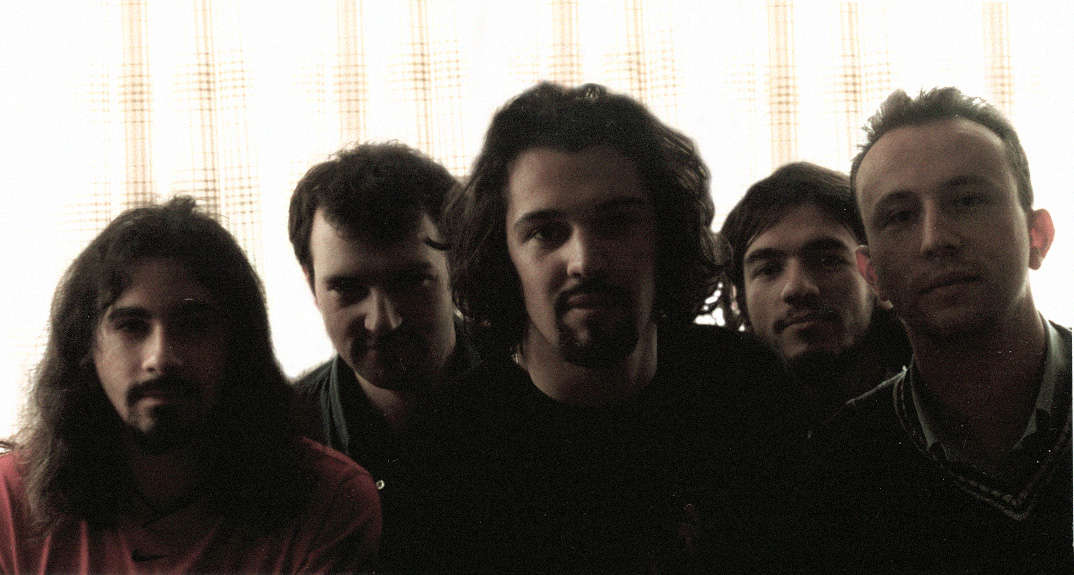
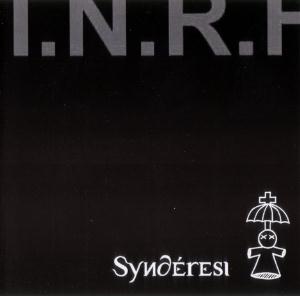
Syndéresi come from the province of Treviso and were formed in the late nineties. The name of the band means Synderesis, a philosophical term that defines the natural capacity or disposition of the practical reason to apprehend intuitively the universal first principles of human action. After some line up changes, in 2001 they started to work on a debut album, a conceptual work inspired by the gospels with a line up featuring Ivan Capraro (vocals, percussion), Ronny Tittoto (guitars, vocals), Giovanni Panno (piano, keyboards, flute), Gianluca Lombardi (bass) and Alberto Bazzaco (drums). In 2003 they finally released a self produced debut album titled I.N.R.H. that, according to the band, was meant just as a demo. Unluckily they didn’t find a deal with any label and soon after the release of the “demo” they split up. It’s a real pity, because I.N.R.H. is a very promising work.

Syndéresi

The acronym I.N.R.I. (Iesus Nazarenus, Rex Iudaeorum) represents the Latin inscription which in English reads as “Jesus the Nazarene, King of the Jews” that was put on Christ’s cross and the album was titled I.N.R.H. (Iesus Nazarenus, Rex Hominum) to underline the human side of Jesus. However, Syndéresi’s album has nothing to do with woks such as Jesus Christ Superstar, it was not conceived as a lecture about the Gospels or to reinterpret them or to exalt religion. The lyrics were written by Alberto Bazzaco and were inspired by the gospels (canonical and apocryphal) but they deal in a poetical way with issues such as fate, omens, the relationship between men and time, feelings. The music recalls the Italian prog masters of the seventies and is built upon the lyrics adding colorful, evocative touches to the concept.


The opener “Annunciazione” (Annunciation) is a kind of disquieting, psychedelic dream where the meeting between the archangel Gabriel and the Virgin Mary provokes an emotional vortex. There’s no happiness, the atmosphere is dark and some passages in the central section recall Il Balletto di Bronzo’s “Ys”. Mary sees in a play of shadows the reclined dying face of Jesus and the Annunciation here becomes almost an ominous presage for the future of her son.


“Natività” (Nativity) features a mysterious atmopshere and some Oriental flavours. This track was inspired by a scene narrated in the apocryphal Gospel of James. As Joseph goes out to look for a midwife to help his young bride to give birth to Jesus, Time suddenly stops. Joseph invokes God asking him to let Time flow again... “He looks astounded up to the sky / Please, let the vertex unbind the hourglass from its stagnation...”.


“Deserto” (Desert) is a nice, ironic track inspired by the meeting between Jesus and Satan in the desert. The rhythm is slow, the sun shines on the dunes, the musical colours are evocative and full of nuances. The devil is tempting Jesus with false promises but he replies that it would be easier tempting him elsewhere, not in a desert where the illusions of the world are covered by the sand... “Come back when my feet will be washed by clear waters / Bring with you wider fishnets...”. A mocking nursery rhyme sung by some children concludes the piece.


“Il discorso della montagna” (Sermon on the mount) is divided in two parts. The first part is an instrumental introduction featuring a delicate, dreamy atmosphere, then the rhythm section and the guitar come in adding new colours. This piece was inspired by the Sermon on the Mount, one of the most widely quoted elements of the canonical Gospels but it’s prevalently instrumental. “Dig an abyss of want and set you foundation in it...”.


“La parabola del seminatore” (The parable of the sower) is a particular acoustic track settled on a street and according to the band they played it as buskers to set the right atmosphere. It was inspired by the Parable of the Sower and in some way tells about another presage. The last part features a narrative vocal part taken from the Gospel of St. Mark... “The secret of the kingdom of God has been given to you. But to those on the outside everything is said in parables so that, they may be ever seeing but never perceiving, and ever hearing but never understanding; otherwise they might turn and be forgiven!” (Mark 4, 10-12).


“Maddalena” (Magdalene) is a delicate acoustic ballad inspired by the character of St. Mary Magdalene. The mood is romantic, the lyrics are hermetic... The memory of a kiss comes to mind in a stormy night as a vortex! The excellent last track “Ultima cena” (Last supper) recalls BMS and was inspired by the Last Supper, the final meal that Jesus shared with his apostles before his crucifixion. A very good conclusion for an interesting work. Of course, the production is not perfect and there are many ingenuities but the overall result is not bad at all. The album is available in free legal download, so have a try and judge by yourselves. Click HERE

Synderesi: I.N.R.H. (2003). Other opinions:
Jim Russell: There is a definite avant-garde spirit to what the musicians consider a symphonic prog album and I believe that whatever they considered unfinished in the production adds to a somewhat mysterious, unsettling, and pleasantly disorienting haze... (Read the complete review HERE)


More info:

Monday, 26 September 2011

VENETO (part 2)

North of Venice lies TREVISO, which in the past gave us prog bands such as Capsicum Red, Asgard and Apryl (from the nearby town of Conegliano). Today here we can find Faveravola (Official Website), a band formed by some veterans who have been active since the seventies and who in 2007 released the beautiful concept album Contea dei cento castagni.


Interesting contemporary bands from this city are also Aphelion (MySpace), an instrumental project featuring metal influences, and Magnetic Sound Machine (MySpace), highly recommended to jazz-rock lovers. Other bands from Treviso that deserve mentioning are Antilabé (MySpace), Geo’s (MySpace), Epoca (Reverbnation), Lyn (MySpace), Safarà (MySpace), Quarto Vuoto (Facebook) and Synderesi (MySpace). In Treviso there are also the headquarters of the independent label specialized in prog Lizard Records. Then, from the nearby town of Montebelluna comes bass player and composer Alberto Rigoni (MySpace), from Asolo come Il Labirinto di Alice (Facebook) while from a beautiful place north of Treviso, Cison di Valmarino, comes an interesting melodic prog band called Ephemeris (MySpace). Another town north of Treviso, Vittorio Veneto, is home to an interesting band called The Former Life (Facebook) and the little town of Motta di Livenza is home to a talanted band called Il Fedelissimo Bracco Branco (Facebook).


Leaving Treviso, still heading north we enter the province of BELLUNO and the amazing alpine area of the Dolomiti, where we can listen to Idea Ostile (MySpace), Crazy Valves (Facebook), Sirgaus (Facebook) and Campo Magnetico (Facebook), born in 2014 from the ashes of a band called John Silver Band (MySpace).


And now back south, to PADUA, the city of Saint Anthony, 40 km west of Venice. Padua is also the birth place of the famous architect Andrea Palladio, whose XVIth century villas in the area of Padua, Venice, Vicenza and Treviso are amongst the most beautiful of Italy, and of Giovanni Battista Belzoni, adventurer, engineer and Egyptologist to whom is dedicated a new concept album by the prog band from Turin Arti e Mestieri, Il grande Belzoni. In the past Padua gave us bands such as Eneide, Mellonta Tauta (Bandcamp), Daphne (Bandcamp) and Audio (Bandcamp) while the contemporary prog scene features bands such as the promising Empirical Time (MySpace), the folk jazz Calicanto (Official Website), the theatrical Lamanaïf (MySpace) and Maieutica (Facebook), the psychedelic Astralia (MySpace), Laatia (MySpace), Hypnoise (MySpace), and Collettivo Androgino (Reverbnation) or the metal influenced Centrica (MySpace) and Twinspirits (MySpace).


In the seventies one of the very few bands linked to the right wing movement, La Compagnia dell’Anello (Official Website), also began life here. The band is still in activity and they’re working on a new album. According to some interviews with the band, it will be a self produced double album in two parts. The first will be heavily prog influenced and will feature a concept inspired by the work of the poet Ezra Pound. The second will feature some new tracks and old unreleased stuff re-arranged. At the moment a new track is available, a piece dedicated to a pilot of the Aeronautica Nazionale Repubblicana, Giovanni Battista Boscutti, who died in 1944 fighting against the Allied forces that were bombarding the city of Padua.


South of Padua lies ROVIGO where we can listen to a good contemporary band called Anfiteatro (MySpace) and to the metal influenced Eloa Vadaath (Reverbnation). Rovigo is also home to composer and multi-instrumentalist Marco Ragni (Facebook) and Alessio Trapella (Facebook) who collaborated with Le Orme and in 2022 released an interesting solo album entitled La ricerca dell'imperfezione. Here there started an interesting band called A Piedi Nudi. Their guitarist, Nicola Gardinale, has changed musical direction and has formed a blues-rock project called Nic-G And The Mogsy (MySpace).


Leaving Rovigo, we head now back north to VICENZA, which in the past gave us bands such as Abissi Infiniti and Top Left Corner. Now it’s the time of Absenthia (Official Website), an excellent band that combines tradition with heavier sounds and in 2009 released an excellent self produced debut album, Tenebrae Vincunt. Other local bands that in my opinion it is worth mentioning are Malus Antler (Facebook) and the jazz-rock Vertical (MySpace) and Mandela (Facebook). Not far from Vicenza, in a town called Bassano del Grappa, which in the past gave us bands such as Antephonia and Slogans, you can find a very good CD shop, Pick Up Records and listen to an interesting band called Glincolti (Official Website), the jazz-rock Endless Season (Facebook) and to Mad Fellaz (Facebook) while Schio is home to Sticky Brain (Facebook)


We conclude our visit to Veneto in VERONA, the city of Romeo and Juliet, also known for its landmark ancient Roman amphitheatre, the Verona Arena, which is internationally famous for its large-scale opera performances. You can find here a good contemporary prog scene featuring excellent bands such as the jazz rock D.F.A. (MySpace), Logos (Official Website) and Astrolabio (MySpace), a new band born from the ashes of Elettrosmog (MySpace), a band that in 2007 released an interesting album entitled Monologando.


Other prog bands from Verona are the neo prog Marygold (Official Website) and Iperuranio (Official Website), the young and very promising Gran Torino (MySpace) and Side C (MySpace), the experimental Reqviem (MySpace) and Le Maschere di Clara (MySpace), then Il Rumore Bianco (Facebook), Rosenkreutz (Facebook), Calia (MySpace), D’Anima (MySpace), Moto Armonico (Reverbnation), MonnaLisa (Facebook), Alchemy Victory (Facebook), Oltremare (MySpace), Castelli in Aria (MySpace), Masons (MySpace), Il Fauno di Marmo (MySpace), The Oneira (Facebook), the metal influenced Methodica (MySpace) and the folk-oriented Domus de Janas (MySpace). A good venue for prog lovers in this area is the Club il Giardino.